Fish, lamprey family
Brook lamprey
- Maximum length
- 21cm
- Best water temperature
- 5–12 °C
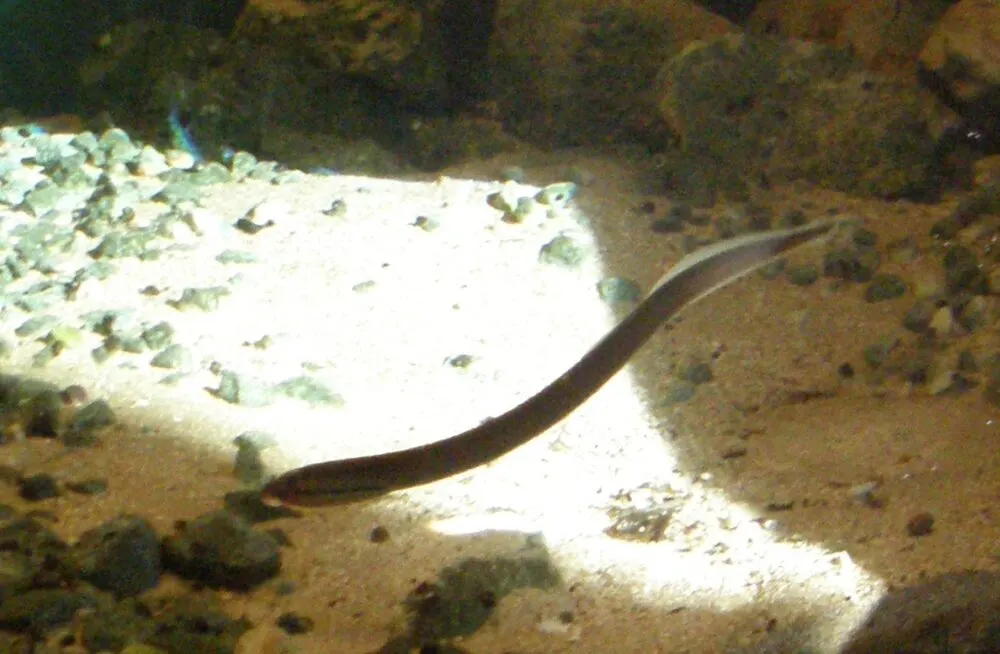
Brook lamprey: the species and fishing rules
About the species Brook lamprey
Length up to21 cm
How to recognise it
Not a true fish but a jawless vertebrate: a snake-like body without scales or paired fins, seven gill openings on each side of the head and a mouth shaped like a sucking funnel.
Where it lives
Clean streams and small rivers with a gravel and sandy bottom. The larvae live for several years buried in fine sand and mud; adult lampreys no longer feed.
Water, occurrence and catches
Water temperature and requirements
At what temperature the species is active and how well today's water suits it.Best temperature5–12 °C
- tolerates 1 to 15 °C
- best 5 to 12 °C
- Length
- up to 21 cm
- Oxygen
- Requires a lot of oxygen
Sizes and the tolerated temperature range come from the FishBase database. We estimated the best temperature from that range, so it is only indicative. In a particular water, fish behave according to the weather, air pressure, oxygen and food.
Data source: FishBase (Froese & Pauly, Eds.), www.fishbase.se, version 06/2026, licence CC BY-NC.
Where it was recorded
Fishing districts around which a record of this species exists (GBIF).
We do not yet have records of this species at any fishing district. The data are supplemented from the GBIF database.
Catches of Brook lamprey
Approved catches by anglers on this portal.
Nobody has logged a catch of this species yet. Be the first; once approved it will appear here and on the leaderboard.

Frequently asked questions
Short answers from the data on this page.Questions2
Where does the brook lamprey live?
Clean streams and small rivers with a gravel and sandy bottom. The larvae live for several years buried in fine sand and mud; adult lampreys no longer feed.
What water temperature does the brook lamprey need?
It does best in water at 5 to 12 °C.
Photo credits
- Brook lamprey: Photo: Ra Boe at German Wikipedia, CC BY-SA 3.0, Wikimedia Commons
- Ukrainian brook lamprey: Photo: Geomyces.destructans, CC BY-SA 3.0, Wikimedia Commons
Minimum sizes, protection periods and permitted fishing methods are set by the fishing regulations and the conditions of the specific fishing district. Check them before you fish.